
Rubber Tree Care

Ficus elastica: Burgundy, Tineke, Ruby and Shivereana
At a glance
| ☀️ Light | Medium to bright indirect. Variegated types need the brighter end. |
|---|---|
| 💧 Water | When the top 5 cm of soil is dry. Every 1–2 weeks in summer, 2–3 in winter. |
| 🪴 Soil | Well-draining: our Tropical Potting Mix. |
| 🌡️ Temp | 16–29°C. Keep away from drafts. |
| 💨 Humidity | Average is fine. |
| 🐾 Pets | Not pet safe The milky sap is irritating to cats and dogs. |
| 🌱 Care level | Easy Beginner |
| 📏 Grows to | 1–2.5 m indoors; easy to keep smaller by pruning. |
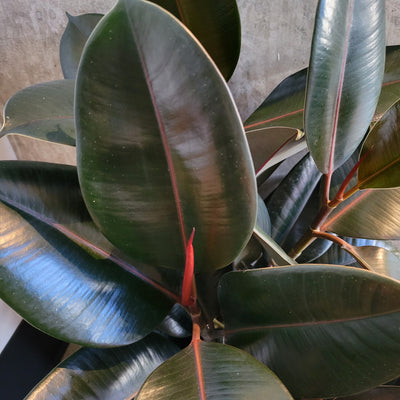
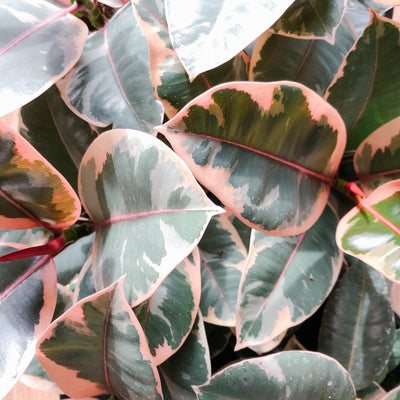
Rubber trees have big, glossy leaves, grow quickly and are one of the easiest ficus to live with. The deep burgundy forms suit medium light, while the pink and cream variegated types ('Tineke', 'Ruby') show their best colour in a bright spot.
Light + placement
Medium to bright, indirect light: near an east or west window, or back from a south window. Dark 'Burgundy' handles medium light well. Variegated 'Tineke' and 'Ruby' need brighter light to keep their colour; in low light, new leaves come in greener. Avoid hot afternoon sun through glass, which can scorch.
Watering
Water thoroughly, then let the top 5 cm dry before the next drink. Rubber trees tell you when they're thirsty: the leaves droop slightly. Yellow leaves with wet soil mean too much water.

Soil + repotting
A well-draining mix like our Tropical Potting Mix in a pot with a hole. Repot every 1–2 years in spring, going up one size.
Feeding + upkeep
Feeding: We feed with Kelpy, a gentle plant food made from BC kelp. Mix 1 teaspoon into 1 litre of water and use it every time you water; this is a hungry plant. Kelpy is gentle enough to use year-round. Our rule of thumb: if your plant is putting out new growth, even in winter, keep feeding. If it's resting, you'll be watering less, so it gets fed less too.
For a slow, natural boost, top-dress the pot with a thin layer of worm castings every few months, or mix some in when you repot. Prefer a granular food? BIOS Natural Plant Food mixes into the top layer of soil (about 1 tablespoon per 6-inch pot) once a month while your plant is growing. A little white fuzz on the soil afterwards is normal; it's the helpful fungi at work.
Wipe the leaves with a damp cloth monthly to keep them glossy (skip leaf-shine products). The red or pink sheath on new leaves falls off on its own; that's normal. To make it bushy, prune the top just above a leaf in spring. The sap is sticky and irritating, so wear gloves and protect the floor.
Propagation
Take a stem cutting with 2–3 leaves in spring, let the sap stop running, and root it in water or moist soil. See Propagation 101.
Common problems
| What you see | Likely cause | What to do |
|---|---|---|
| Yellow lower leaves | Overwatering | Let the top 5 cm dry; make sure the pot drains. |
| Drooping leaves, dry soil | Thirsty | Water deeply; it perks up within a day. |
| Variegation fading to green | Not enough light | Move to a brighter spot. |
| Leaves dropping after a move | Adjusting to new conditions | Keep it in one place; it settles in a few weeks. |
| Brown crispy patches | Sunburn or very dry heat | Move out of direct afternoon sun; away from heaters. |
Varieties we carry
Same care for all rubber trees. Variegated ones want a little more light. Only what's in stock online right now is shown.
Frequently asked questions
How fast do rubber trees grow?
Quickly in good light: often a new leaf every week or two in summer.
How do I make my rubber tree bushier?
Cut the top off just above a leaf in spring. It will branch from below the cut.
Is a rubber tree safe for pets?
No. The milky sap can irritate a pet's mouth and stomach.
What is the red sheath on new leaves?
A protective cover for the new leaf. It dries and falls off on its own.
Should I use leaf shine?
No. A damp cloth is all it needs. Shine products can clog the leaf surface.
Rubber Tree care kit
- Tropical Potting Mix: Our all-round Soil Bar mix for leafy tropicals.
- Moisture Meter · $14.99: Tells you when the bottom of the pot is actually dry.
- Plant Cleaning Gloves: The easiest way to dust big leaves.
- Pruning Shears: Clean, sharp cuts when shaping or removing leaves.
- Kelpy Plant Growth Booster: Gentle BC kelp plant food you can use year-round.
- Worm Castings: A slow, natural boost from our Soil Bar. Top-dress every few months.
Bring your plant (or a photo) to 515 Chatham St #103 and we'll take a look. Open 11–5, 7 days a week, with street parking nearby. Get directions →
More plant care guides
Snake Plant · Monstera · Bird of Paradise · Ficus Audrey · Fiddle Leaf Fig · Ficus Altissima · Ficus Amstel King · Dracaena Marginata · All plant care →