
Calathea Care

Calathea (now mostly Goeppertia): Rattlesnake, Peacock, Ornata, White Star, Rosy and more
At a glance
| ☀️ Light | Medium to bright indirect. No direct sun. |
|---|---|
| 💧 Water | Keep lightly moist. Water when the top 2–3 cm is dry. |
| 🪴 Soil | Moisture-holding but airy: our Tropical Potting Mix. |
| 🌡️ Temp | 18–27°C. Hates cold drafts. |
| 💨 Humidity | Higher is better; 50%+ for the fussier types. |
| 🐾 Pets | Pet safe Non-toxic to cats and dogs. |
| 🌱 Care level | Moderate Pet safe |
| 📏 Grows to | 30–90 cm. |
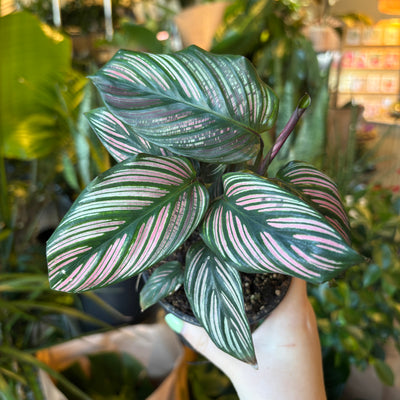
Calatheas have some of the most beautiful leaves of any houseplant, painted with stripes, feathers and pink. They're also prayer plants: the leaves lift at night and lower in the morning. They're pet safe, but a little particular about water and dry air.
Light + placement
Medium to bright, indirect light: a metre or two from an east or north window is ideal. Direct sun fades and burns the patterns. Too little light and the colours dull and growth stalls.
Watering
Keep the soil lightly moist, never soggy and never bone-dry. Water when the top 2–3 cm is dry. Calatheas can be sensitive to minerals in tap water; letting water sit out overnight, or using filtered or rain water, helps if you see brown tips.
- Curled leaves during the day usually mean thirst.
- Yellowing leaves with wet soil mean too much water.
- Water at room temperature; cold water can shock the roots.

Soil + repotting
A moisture-holding but well-draining mix like our Tropical Potting Mix. Repot every 1–2 years in spring, one size up.
Feeding + upkeep
Feed monthly from April to September at half strength. Trim crispy edges with clean scissors, following the leaf's shape. Wipe the leaves gently and check the undersides for spider mites.
Common problems
| What you see | Likely cause | What to do |
|---|---|---|
| Crispy brown edges | Dry air or uneven watering | Raise humidity; water before the soil dries out. |
| Leaves curling | Thirsty or too much sun | Water; move out of direct light. |
| Yellow lower leaves | Overwatering | Let the top few cm dry before watering. |
| Faded pattern | Too much direct light | Move to bright indirect light. |
| Fine webbing, speckled leaves | Spider mites (common in dry winter air) | Shower the plant and treat with Houseplant Spray. |
Varieties we carry
Same care for all calatheas. Rattlesnake and Peacock are among the most forgiving; Orbifolia and White Star want the most humidity. Only what's in stock online right now is shown.


Frequently asked questions
Are calatheas safe for cats and dogs?
Yes, they're non-toxic. See Easy Pet-Safe Houseplants for more.
Why do my calathea's leaves move?
They're prayer plants: leaves lift at night and lower in the day, following the light.
Why are the edges going brown?
Almost always dry air or the soil drying out completely. Raise humidity and water a little sooner.
Which calathea is easiest?
Rattlesnake and Peacock calatheas are the most forgiving.
Calathea care kit
- Tropical Potting Mix: Our all-round Soil Bar mix for leafy tropicals.
- Moisture Meter · $14.99: Tells you when the bottom of the pot is actually dry.
- Houseplant Spray: For spider mites, mealybugs and other pests.
Bring your plant (or a photo) to 515 Chatham St #103 and we'll take a look. Open 11–5, 7 days a week, with street parking nearby. Get directions →
More plant care guides
ZZ Plant · Pothos · Hoya · Heartleaf Philodendron · Peperomia · Ferns · Prayer Plant · Scindapsus · All plant care →