
Alocasia Care

Alocasia (elephant ear): Dragon Scale, Silver Dragon, Black Velvet, Polly and more
At a glance
| ☀️ Light | Bright indirect. |
|---|---|
| 💧 Water | When the top 3–5 cm is dry. Less in winter. |
| 🪴 Soil | Chunky and airy: our Chunky Monkey Mix. |
| 🌡️ Temp | 18–29°C. Hates cold. |
| 💨 Humidity | Higher is better: 50%+. |
| 🐾 Pets | Not pet safe Toxic to cats and dogs if chewed. |
| 🌱 Care level | Moderate |
| 📏 Grows to | 30 cm to 1 m+, depending on variety. |
Alocasias have dramatic arrow-shaped leaves in silver, velvet, black and scaled textures. They're show-stoppers, but they have a reputation for drama. The secret is understanding their rhythm: fast growth in the warm months and a slower, sometimes leaf-dropping rest in winter.
Light + placement
Bright, indirect light: near an east window or set back from a south or west window. Low light leads to stretched stems and leaf loss. Avoid hot direct sun on the leaves.
Watering
Water when the top 3–5 cm of soil is dry; never let it sit soggy. In winter, water much less. The corm at the base rots easily in cold, wet soil.

Soil + repotting
A chunky, airy mix like our Chunky Monkey Potting Mix. Alocasias like a snug pot; repot only when roots fill it, in spring or summer.
Feeding + upkeep
Feed every 2–4 weeks from April to September. It's normal to lose an old leaf each time a new one opens. Check under the leaves weekly for spider mites, especially in dry winter air.
Propagation
When repotting, look for small corms (bulb-like bulblets) in the soil. Pot them in moist sphagnum or LECA and they'll sprout new plants. See Propagation 101.
Common problems
| What you see | Likely cause | What to do |
|---|---|---|
| Fine webbing, speckled leaves | Spider mites (very common) | Shower the leaves and treat with Houseplant Spray weekly until clear. |
| Leaves dying back in winter | Dormancy | Water less, keep warm; it regrows in spring. |
| Yellow leaves, mushy corm | Overwatering, rot | Let it dry; remove rotten parts and repot. |
| Drooping leaves | Thirsty or cold | Check the soil; move away from cold windows. |
| Brown crispy edges | Dry air | Raise humidity. |
Varieties we carry
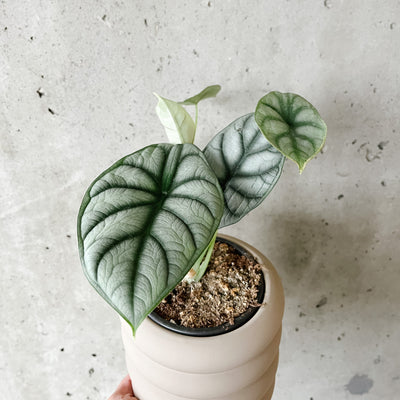
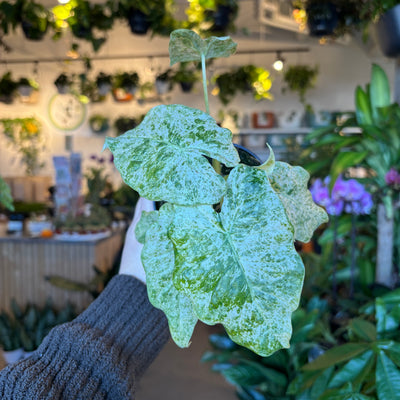
Same care for all alocasias. The jewel types (Dragon Scale, Black Velvet, Silver Dragon) stay compact. Only what's in stock online right now is shown.


Frequently asked questions
Why does my alocasia keep losing leaves?
Often it trades an old leaf for a new one. In winter it may rest and drop several. A firm corm means it's fine.
Is alocasia safe for pets?
No. It's toxic to cats and dogs if chewed.
How do I stop spider mites?
Check weekly, shower the leaves, raise humidity, and treat at the first sign of webbing.
Can alocasias go outside in summer?
Yes, in shade on a warm patio. Bring them in before nights drop below 12°C.
Alocasia care kit
- Chunky Monkey Potting Mix: Bark-rich and airy, for climbers and aroids.
- Houseplant Spray: For spider mites, mealybugs and other pests.
- LECA Clay Pebbles: For pebble trays and semi-hydro growing.
Bring your plant (or a photo) to 515 Chatham St #103 and we'll take a look. Open 11–5, 7 days a week, with street parking nearby. Get directions →
More plant care guides
Sundew · Venus Fly Trap · Tradescantia · Goldfish + Lipstick Plants · Air Plants · Pink Princess · Monstera Adansonii · Anthurium · All plant care →