
Pitcher Plant Care (Sarracenia)

Sarracenia (North American pitcher plants)
At a glance
| ☀️ Light | Full sun: 6+ hours, ideally outdoors. |
|---|---|
| 💧 Water | Always wet. Stand in a tray of rain or distilled water. |
| 🪴 Soil | Nutrient-free: our Carnivorous Blend. |
| 🌡️ Temp | Outdoors year-round in Victoria; needs a cold winter rest. |
| 💨 Humidity | Outdoor air. |
| 🐾 Pets | Pet safe Not known to be toxic to cats and dogs. |
| 🌱 Care level | Moderate Carnivorous Outdoor plant |
| 📏 Grows to | 15–90 cm, depending on species. |
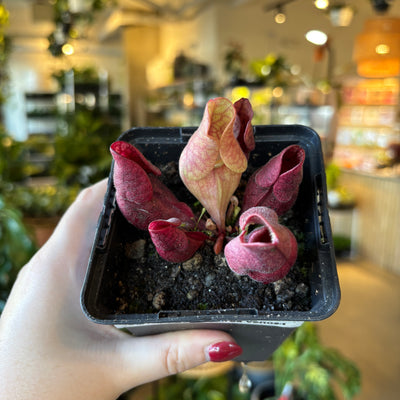
Sarracenia are North American bog plants with tall, colourful trumpet-shaped pitchers that lure insects inside with nectar. They're outdoor plants: they need full sun and a cold winter, and Victoria's climate suits them beautifully. Expect a summer full of wasps and flies caught for you.
Light + placement
Full sun, 6 or more hours a day. A sunny balcony, deck or garden bog is ideal. Indoors, even a south window is usually not enough; pitchers grow floppy and green.
Watering
Keep the soil wet at all times: stand the pot in a tray with 2–3 cm of water. Use only rain, distilled or reverse-osmosis water. Victoria's rain does a lot of the work for you from fall to spring.

Soil + repotting
A nutrient-free mix like our Carnivorous Blend (peat and perlite), in a plastic pot. Never use regular soil or fertilizer. Repot or divide every 2–3 years in late winter, before new growth.
Feeding + upkeep
Don't fertilize; outdoors they catch all the food they need. In late winter, trim the old brown pitchers back to the base to make room for new growth.
Winter dormancy
Sarracenia need a 3–4 month cold rest (roughly 0–10°C) from November to February. Growth stops and many pitchers brown; this is normal and essential. Skipping it weakens the plant.
Common problems
| What you see | Likely cause | What to do |
|---|---|---|
| Floppy, green pitchers | Not enough sun | Move outdoors into full sun. |
| Plant browning in fall | Normal dormancy | Leave it outdoors; trim in late winter. |
| Slow decline, black roots | Tap water or fertilizer | Repot in fresh mix; use rain water. |
| Dry, crispy pitchers in summer | Water tray dried out | Keep the tray topped up. |
| Smelly pitchers | Normal: digesting insects | Nothing to fix. |
Varieties we carry
We carry purpurea, flava hybrids, 'Red Tube' and more in spring and summer. Only what's in stock online right now is shown.
Frequently asked questions
Can pitcher plants live indoors?
Not well. Sarracenia need full sun and a cold winter, so they're best outdoors.
Do I need to feed my pitcher plant?
No. Outdoors it catches plenty of insects.
Can I use tap water?
Use rain, distilled or reverse-osmosis water to avoid mineral build-up.
Is it dead in winter?
No, it's dormant. New pitchers come in spring.
Pitcher Plant care kit
- Carnivorous Blend: Our nutrient-free Soil Bar mix for fly traps, sundews and pitcher plants.
Bring your plant (or a photo) to 515 Chatham St #103 and we'll take a look. Open 11–5, 7 days a week, with street parking nearby. Get directions →
More plant care guides
Lithops · Indoor Palms · Peace Lily · Fittonia · Pilea · String of Pearls · Cactus · Olive Tree · All plant care →