
Spider Plant Care

Chlorophytum comosum
At a glance
| ☀️ Light | Medium to bright indirect. |
|---|---|
| 💧 Water | When the top half of the soil is dry. |
| 🪴 Soil | Our Tropical Potting Mix. |
| 🌡️ Temp | 10–27°C. |
| 💨 Humidity | Average is fine. |
| 🐾 Pets | Pet safe Non-toxic to cats and dogs (though cats love to chew them). |
| 🌱 Care level | Beginner Pet safe |
| 📏 Grows to | 30–60 cm, with trailing runners. |
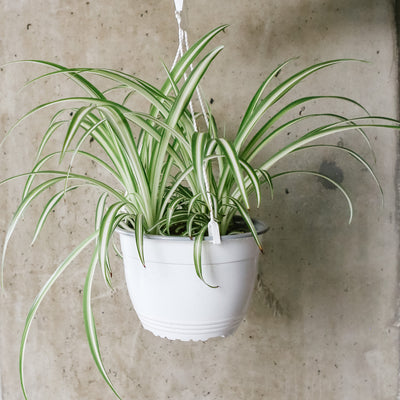
Spider plants are tough, fast-growing and pet safe, with arching striped leaves and little "spiderettes" dangling on long runners. They're one of the best plants for beginners and for sharing with friends.
Light + placement
Medium to bright, indirect light keeps the stripes bright and encourages babies. They tolerate lower light but grow slowly and may lose some striping. Avoid hot direct sun.
Watering
Water when the top half of the soil is dry. The thick roots store water, so it forgives the odd missed watering. Brown tips are common and usually come from dry air or uneven watering.

Soil + repotting
Our Tropical Potting Mix. They grow fast and fill pots with roots; repot every year or two in spring, or divide large plants.
Feeding + upkeep
Feed monthly from April to September at half strength. Trim brown tips at an angle with clean scissors. Remove old yellow leaves at the base.
Babies (spiderettes)
Mature, slightly pot-bound plants send out runners with baby plants. Snip a baby off and root it in water or pin it into a small pot of moist soil while it's still attached. See Propagation 101.
Common problems
| What you see | Likely cause | What to do |
|---|---|---|
| Brown leaf tips | Dry air, uneven watering or salt build-up | Trim tips; water evenly; flush the soil occasionally. |
| Pale, washed-out leaves | Too much sun | Move to indirect light. |
| No babies | Young plant or too much pot space | Be patient; slightly pot-bound plants make more babies. |
| Yellow, soft leaves | Overwatering | Let the top half dry. |
| Chewed leaves | Cats | Hang it up high; it's safe, but they'll keep trying. |
Varieties we carry
We carry variegated, curly and green spider plants. Only what's in stock online right now is shown.
Frequently asked questions
Is a spider plant safe for cats?
Yes. It's non-toxic, though cats love to chew it.
Why are the tips brown?
Usually dry air or uneven watering. Trim them and water more consistently.
How do I get babies?
Bright light and a slightly snug pot encourage runners.
Is it good for beginners?
One of the best. It's tough, forgiving and easy to propagate.
Spider Plant care kit
- Tropical Potting Mix: Our all-round Soil Bar mix for leafy tropicals.
- Pruning Shears: Clean, sharp cuts when shaping or removing leaves.
- Kelpy Plant Growth Booster: Gentle seaweed feed for spring and summer.
Bring your plant (or a photo) to 515 Chatham St #103 and we'll take a look. Open 11–5, 7 days a week, with street parking nearby. Get directions →
More plant care guides
String of Turtles · Maidenhair Fern · Philodendron Birkin · Bird's Nest Fern · String of Hearts · Jade Plant · Lucky Bamboo · Rabbit's Foot Fern · All plant care →